
Municipalist Neighborhood Experiments

MUNEX – Building capacity from the bottom up
About the Project
Municipalist Neighbourhood Experiements (MUNEX) is a JPI Urban-Europe research project coordinated by the University of Amsterdam to study bottom-up capacity building across different municipalist contexts in Europe. The project involves the University of Vienna and the Institut de Recerca Urbana de Barcelona as research institutes and some more 7 project partners outside academia.
How to address growing inequality, cynicism, distrust, and alienation? A growing municipalist movement argues that we should look for answers at the local level. Municipalism seeks to reinvent and reinvigorate local urban democracy by pushing back against overbearing bureaucracies and overpowering market forces. While the commitment to municipalism is strong and the momentum palpable, a key question is whether and how municipalist initiatives – from digital democracy platforms to public-communitarian partnerships – work in practice. To answer this question, the MUNEX project examines municipalist policy experiments in neighborhoods in three cities: Amsterdam, Barcelona, and Vienna.
The project was funded from 04/2022 until 06/2025.
-
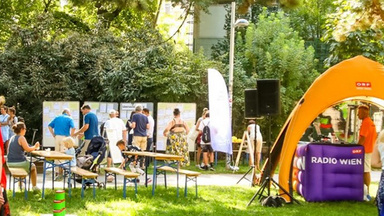 Stadt Wien MA20 / Fürthner
-
 Gemeente Amsterdam
-
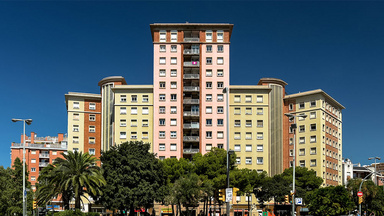 Jorge Franganillo / Wikimedia Commons
-
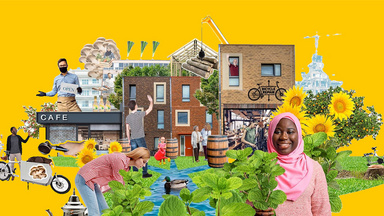 Private


The Consortium
University of Amsterdam
The University of Amsterdam (UvA) is a dutch research and teaching organization founded in 1632. The Center for Urban Studies (CUS) at the University of Amsterdam is one of the largest and most prominent of its kind. The CUS stimulates interdisciplinary and transdisciplinary collaborative projects on urgent issues facing cities. It CUS serves as a hub for local networks spanning the university, civil society, businesses, and governments as well as for global networks of urban scholars, practitioners and policy makers.
The CUS’ tasks in the project include the overall project coordination in WP1, leading WP2 on elaborating the shared approach and common hypotheses, and the conducting of the fieldwork in Amsterdam in WP3.

Institut de Recerca Urbana de Barcelona
The Institut de Recerca Urbana de Barcelona (IDRA), formerlly La Hidra, is a research and advocacy institute dedicated to making cities more equitable and sustainable by combining the efforts of social movements, policy makers and engaged academics. The center is renowned for its capacity to bring together the production of scientific knowledge with the creation of practical solutions around critical challenges such as housing rights, environmental justice, urban planning, and inequality. Over the last years, IDRA has been deeply involved in both the construction and conceptual analysis of municipalism in a vast array of European and Latin American cities, working with scholars, local communities, cooperatives, bottom-up entrepreneurs, and urban governments.
IDRA’s main tasks in the project will be leading WP4 for the urban living labs in Barcelona and the transnational exchange of policy prototypes in WP6.

University of Vienna
The University of Vienna (UniVie) is an Austrian research and teaching organization founded in 1365. The Research Platform “The Challenge of Urban Futures” at the UniVie is a dynamic center undertaking research in the area of Urban Policies and Social Sciences broadly conceived. The Platform’s analytical focus hinges on the city as a focal point where broad processes materialize and inter-relate. The Platform aims at unravelling the social, cultural, economic and politico-institutional mechanisms underlying the convergences and divergences across urban space, focusing on rescaling processes and governance structures. To achieve this ambitious task, the Research Platform brings together researchers both within and outside the University of Vienna sharing expertise on the multifarious facets of cities. The Platform adopts an holistic approach, drawing on interdisciplinarity, comparisons, and advanced data analysis.
In MUNEX, UniVie leads WP5 on the Vienna living labs and WP7 on knowledge dissemination.

Transantional Institute
The Transnational Institute (TNI) is an international research and advocacy institute committed to building a just, democratic and sustainable planet. Since its foundation in 1974, TNI has served as a unique nexus between social movements, engaged scholars and policy makers. With more than 30 researchers and support staff, it works with social movements and activists to translate bold and broad visions into pragmatic and just solutions.
TNI’s role in the project is to facilitate the transnational exchange of municipalist policy ideas and prototypes through the organization of international meetings that bring together researchers, practitioners, and activists. It takes a prominent role in WP6 on transnational policy exchange and WP7 on dissemination and a supporting role in WP2 on the elaboration of a shared approach.

Municipality of Amsterdam
The Municipality of Amsterdam employs around 15.000 people to serve Amsterdam’s population of around 820.000 residents. The Municipality of Amsterdam’s tasks in the project include participation in the Amsterdam living lab, co-producing a prototype of a municipalist policy measure to foster an inclusive and diverse political culture, providing feedback for the research, and making connections between the university and local stakeholders.
The Municipality plays a prominent role in WP3 on the living lab in Amsterdam and a supporting role in WP2 on the elaboration of a shared approach and WP7 on dissemination.

Municipality of Barcelona
The city of Barcelona constitutes a unique case study for the analysis of innovative forms of democratic governance, due to the existence of a municipalist movement that since 2015 has endeavored to boost civic engagement in urban governance. This particular conjuncture provides us with an opportunity to explore the strengths and limitations of territorialized politics, grassroots mobilization, alternative institution-building processes, and how they are influencing policy transformations.
The City plays a prominent role in WP4 on the living lab in Barcelona and a supporting role in WP2 on the elaboration of a shared approach and WP7 on dissemination.

Municipality of Vienna
The City of Vienna is both a federal state and a municipality of Austria. The former gives the City some tax sovereignty and more redistributive power, which led a strong orientation towards providing key services such as affordable housing, public transport and green space. The City consists of 23 districts and these districts also holds some power over financing and implementing green and transport infrastructure. As such the administration of the City of Vienna, which employs around 32.000 people, aims to achieve a high quality of life for its 2 million residents.
The City of Vienna plays a prominent role in WP5 on the living lab in Vienna and a supporting role in WP2 on the elaboration of a shared approach and WP7 on dissemination.

Kracht van Mokum
Kracht van Mokum is a federation of neighborhood organizations with diverse backgrounds and ranging from large and established organizations to emerging informal initiatives. “Mokum,” originally a Yiddish term, is slang for Amsterdam, and “Kracht” refers to strength of power, meaning that Kracht van Mokum refers to the power present in the city’s formal and informal resident networks. In line with municipalist policy philosophy, Kracht van Mokum to localize politics, amplify marginalized voices, and revise government policy so that it becomes open and amenable to bottom-up initiatives.
Kracht van Mokum plays a prominent role in WP3 on the living lab in Amsterdam and a supporting role in WP2 on the elaboration of a shared approach and WP7 on dissemination.

Coòpolis
Coòpolis is a dynamic center for the promotion of municipalism and cooperativism: a strategic facility for the social and solidarity economy (SSE), at the Barcelona and Catalan scale. It is currently the largest cooperative promotion center in southern Europe, with a footprint of almost 4,200 square meters. Coòpolis acts as the Cooperative Athenaeum of Barcelona, an incubator of cooperative start ups that works with the Barcelona City Council and receives its economic support. At the Catalan level, it is part of the Network of Athenaeum Cooperatives of the ARACOOP Program; a program which has enabled the creation of a network of ten cooperative athenaeums around Catalonia and a fundamental part of the legal-institutional framework of the social economy and its promotion policies.
Coòpolis plays a prominent role in WP4 on the living lab in Barcelona and a supporting role in WP2 on the elaboration of a shared approach and WP7 on dissemination.

Caritas
Founded after World War I, Caritas Archdiocese Vienna is a social aid and service organization working in the city of Vienna as well as in large parts of Lower Austria. The Neighborhood Work of Caritas Vienna includes around 25 employees and 45 volunteers who work in different neighborhoods, districts, and communities. One particular concern is to raise awareness of the social realities of disadvantaged people and to contribute to social justice. Caritas is a key player in the neighborhood of Margareten and is well-positioned to broker ties with underrepresented groups and vulnerable populations.
In this capacity, it will contribute to WP5 on the living labs in Vienna. In addition, Caritas has a supporting role in WP2 on the elaboration of a shared approach and WP7 on dissemination.

Research Team
Amsterdam Team

Carla Huisman
PhD
Carla Huisman is a postdoctoral researcher at the University of Amsterdam, Department of Human Geography, Planning and International Development Studies in the Research Group Urban Geographies.
Besides the sociological research on social-spatial inequality and the precarisation of the Dutch rental market, Carla is chairwoman of the grassroots, volunteer-driven housing association Woningbouwvereniging Soweto.
Visit personal website
Justus Uitermark
PhD
Justus Uitermark is Professor of Urban Geography and the Academic Director of the Amsterdam Institute for Social Science Research. To study how we create urban environments and those environments shape us, he draws upon different perspectives, ranging from human ecology and historical sociology to various strands of critical theory. His lines of research include: Reflexive computational social science, Cities and social movements and Urban policy and spatial inequality.
EmailCopy email to clipboardVisit University of Amsterdam Profile
Barcelona Team

Carme Arcarazo
M.A.
Carme is researcher and project technician at IDRA and holds a Bachelor's degree in Economics and Political Science from the University of Amsterdam (2017) and Master in Urban Studies, UAB (2023), with a specialization in urban political economy, housing and public policies.
Visit Profile at the Barcelona Urban Research Institute
Estefanía Izrael
M.A.
Estefanía Izrael is researcher and project manager at IDRA and holds a Bachelor's degree in Anthropology (UBA) and a Master's degree in Human Rights and Social Policies (UNSAM). She has worked as a middle school and university teacher, as well as a consultant in Diversity, Equity and Inclusion for different organizations. Between 2019 and 2022 she was a technical advisor and training coordinator at the Undersecretary of Human Rights and Cultural Pluralism of the Autonomous City of Buenos Aires, Argentina.
Visit Profile at the Barcelona Urban Research Institute
Rubén Martínez Moreno
PhD
Rubén Martínez is Director of the Area of Urbanism and Ecological Transition at IDRA. He obtained a PhD in Public Policy and Social Transformation from the Universitat Autònoma de Barcelona in 2018, and a Master in Political Science in 2014 from the same university. For a decade he conducted research on the economy of culture and on social innovation practices in the face of the ecosocial crisis in Europe and Latin America.
Visit Profile at the College of Arts and Design Barcelona
Jaime Palomera Zaidel
PhD
Jaime Palomera is Director of the Housing and City Area at the research institute IDRA. Jaime both as an anthropolical researcher and university teacher, is guided by the principle that housing is a right and not a financial asset, that cities are for living and not for speculation. He obtained a PhD from the University of Barcelona (2013), a Master's degree from the University of London (2007), and was Visiting Fellow at the Graduate Center in New York (2009) and the EHESS in Paris (2010).
Visit Profile at the Barcelona Urban Research InstituteVienna Team

Byeongsun Ahn
PhD
Byeongsun Ahn is a postdoctoral researcher at the Department of Sociology, University of Vienna and affiliated with the Research Platform: The Challenges of Urban Future at the same university. Before finishing his doctoral degree in sociology at University of Vienna, he received his BA. in political science from the same university in 2014, and his MSc. in sociology from University of Amsterdam in 2015.
EmailCopy email to clipboardu:cris URL

Yuri Kazepov
PhD
Yuri Kazepov is a Professor of Urban Sociology at the Department of Sociology at the Faculty of Social Sciences (University of Vienna). His research interests address the territorial dimension of social policies in a comparative perspective, multilevel governance arrangements, social and environmental sustainability, school-to-work transitions. On these topics he carried out extensive research at European level in different policy domains.
EmailCopy email to clipboardu:cris URL

Natalie Trell
B.A.
Natalie Trell is a master student at the Department of Sociology, University of Vienna, writing her thesis on digitalization in Viennese Schools.
Research Framework
Project aim
Our overarching goal is to work with municipalities, citizens and transnational municipalist networks to build capacity by forging knowledge networks through living labs and assessing the conditions of success for municipalist policy measures. Our living labs and experiments draw from, and in turn contribute to, local urban innovation ecosystems. Together with our cooperation partners (three municipalities, three civil society organizations, and an international knowledge hub) and local stakeholders (residents, social entrepreneurs and civil society organizations), our living labs will co-create a prototype municipalist innovation in each neighborhood, which will be adapted to the contexts of the other two neighborhoods in an ambitious transnational exchange.
Project objectives
MUNEX is primarily a strategic urban research project with a secondary focus on applied urban research.
Our ‘strategic urban research’ (Objectives 1 and 3) will increase knowledge of how neighborhoods function as innovation ecosystems for municipalist experiments which can be scaled up transnationally.
Our strategic insights will feed directly into ‘applied urban research’ (Objectives 2 and 4). Our applied research will facilitate capacity building by strengthening networks and co-creating policy resources in neighborhoods and internationally.
- Identifying innovative municipalist experiments in our three case study neighborhoods. We will create an inventory that tracks the development, implementation and effects of municipalist experiments. It will take stock both of experiments that worked and also those that did not, so as to deepen understanding of the conditions for success.
- Establishing urban living labs in our three case study neighborhoods, bringing together local stakeholders to jointly assess municipalist experiments and propose improvements. Stakeholders will integrate their insights and hone the inventory into a neighborhood-focused policy manual facilitating implementation in practice.
- Identifying and developing prototype municipalist innovations. In each neighborhood, we co-create a prototype of exemplary municipalist practice with our partners. We will prototype a tool for participatory budgeting in Vienna, a tool for public-communitarian partnerships in Barcelona, and a community organization strategy for inclusive and diverse political cultures in Amsterdam.
- Establishing policy seminars facilitating the exchange of prototypes between transnational stakeholders in all three cities. These seminars will enable transnational exchange and implementation of the prototypes and inform our final municipalist toolkit in the form of a policy manual to disseminate our results.
From the approach to the realization
In each neighborhood, we will set up living labs to collaborate with local stakeholders to assess and develop municipalist experiments across three crucial domains:
- Experiments to create inclusive and diverse political cultures. Participation in politics is notoriously uneven, especially in neighborhoods experiencing gentrification. Low-income groups and social minorities are not only at risk of displacement from neighborhoods but also from decision-making on how to make their neighborhoods livable and sustainable.
- Experiments to empower communities through public-communitarian partnerships. Collective assets such as community centers, heritage and green spaces, can be owned and managed by communities using innovative governance frameworks, such as public-communitarian partnerships.
- Experiments in participatory budgeting, an instrument that has long been used for the promotion of participatory democracy and that has become integral to municipalist strategies. We examine how this tool can be used to stimulate responses to climate change, which is the focus of participatory budgeting in Vienna.
Experiments in all three domains develop bottom-up, community-driven strategies for sustainable and inclusive urban development. We acknowledge that the innovations are often checkered or piecemeal. In particular, there is a tension between deepening and broadening participation: when participation becomes more intense and consequential, it tends to become more selective. Living labs are a suitable method to build capacity and develop strategies to deal with such tensions. Our research methods are drawn from the toolkit of engaged, innovative and practice-based research. Apart from living labs, we rely on interviews, participant observation, focus groups, and policy experiments.
Outreach
Reports
Scientific Publications
Ahn, B & Kazepov, YAK 2025, 'New Municipalism and the Challenges of Design: Context, Instruments and Implementation', Tijdschrift voor Economische en Sociale Geografie, vol. 116, no. 4, pp. 409-423. https://doi.org/10.1111/tesg.12659
Kazepov, YAK, Ahn, B & Cucca, R 2024, 'The ‘European City’ at the Crossroads: Four Analytical Elements for Understanding Convergence and Differentiation', Tijdschrift voor Economische en Sociale Geografie, vol. 115, no. 2, pp. 267-280. https://doi.org/10.1111/tesg.12605
Ahn, B, Friesenecker, M, Kazepov, YAK & Brandl, J 2023, 'How Context Matters: Challenges of Localizing Participatory Budgeting for Climate Change Adaptation in Vienna', Urban planning, vol. 8, no. 1, pp. 399-413. https://doi.org/10.17645/up.v8i1.6067
Dossier on Emancipatory Epistemologies
A collaborative submission (dossier) to a special issue for the journal Tijdschrift voor economische en sociale geografie is in the works on the topic of “Emancipatory Epistemologies”.
The aim of the dossier is to bring together experiences from three European cities with engaged research into municipalist practices. The collection of articles seeks to contribute to the current academic and societal debate on the roles of researchers, especially those that actively engage with their research subject. Municipalism provides a concrete case, which concerns the recent movement of urban communities together with local government developing new ways of influencing local developments. Municipalism redefines the role of the citizen and the municipality and the relation between them, geared towards a plurality of progressive policies in several cities across Europe and the Americas. But what of the role of researchers? The overarching question connecting this collection of articles is: What roles can/ should/ do researchers take in such processes?
Publications:
Ahn, B. and Kazepov, Y. (2025), New Municipalism and the Challenges of Design: Context, Instruments and Implementation. Tijds. voor econ. en Soc. Geog., 116: 409-423. Access the article on the publisher's website
Huisman, C.J. (2025), Provocateur, Supporter, Mediator: An Emancipatory Epistemology of Roles. Tijds. voor econ. en Soc. Geog., 116: 424-438. Access the article on the publisher's website
Huisman, C.J. and Uitermark, J. (2025), Emancipatory Epistemologies and Municipalist Policies. Tijds. voor econ. en Soc. Geog., 116: 387-390. Access the article on the publisher's website
Martínez Moreno, R. and Palomera Zaidel, J. (2025), Militant Research and Public Policy: From Action to Reform and from Reform to Action. Tijds. voor econ. en Soc. Geog., 116: 391-408. Access the article on the publisher's website
Conferences
Conference Paper ”How Context Matters: Localizing Participatory Budgeting for Climate Change Adaptation in Vienna” (Byeongsun Ahn, 2023)